
Putting "titles" on people -- such as "Animal Rights Person," and "Anti-vaxxer" and the implications for the health and well-being of both humans and animals
An acquaintance of mine introduced me the other day to a friend of hers, identifying me as an "Animal Rights person." I had never thought of myself as such, but, in any case, labeling someone is counter-productive to getting to know them. It makes it easy to put that person into a "boxed" definition of who they are, without any nuance of how that person lives their life in relation to animals. If anyone needs to put a title on me, I would offer that I am a "Have Mercy" person. "Have Mercy" refers to a book by Matthew Scully entitled "Dominion: The Power of Man, The Suffering of Animals, and the Call to Mercy." I don't believe that animals have "rights" in the sense that most people would define "rights"; but I do believe that they deserve mercy.
On "antivaxxing": Unfortunately, due to the Make America Healthy Again movement, many people are going against the science of vaccines, having been told by Secretary Kennedy -- against all scientific medical advice -- that they are discretionary and that it could be dangerous to agree to have more than one vaccine administered during one visit to a doctor's office. This is totally against the findings of scientific research. Vaccines have saved millions of lives and will only continue to do so if we all have them at the scientifically-recommended times.
An exception for dogs: When it comes to dogs, however, especially small dogs, the research does, in fact, show that there are adverse events associated with multiple shots at one visit. You can read more at this link.
The Senior Dogs Project would like to add that, although undocumented by wide research, in our own experience, a small senior dog may be even more adversely affected by multiple vaccinations given at one veterinary visit. Here are more scientifically-based recommendations on vaccinations from the Senior Dogs Project site.
Teri G. August 19, 2026
SUMMER2026 --Tick populations are increasing! Your attention is needed!
According to a recent NYTimes article, "Summer is peak tick season, and with the pests comes the risk of Lyme, spotted fevers and other tick-borne illnesses.
"For decades, people across the United States have generally known what to expect from the ticks in their area. In the Northeast, where rates of E.R. visits for tick bites are the highest, for example, the blacklegged tick and the Lyme disease it spreads have long posed the greatest threat. And the lone star tick, which can cause the red meat allergy known as alpha-gal syndrome, has historically been a problem in the Southeast.
"But some of those risks are changing as booming deer populations, shifting land use and rising temperatures bring different species of ticks — and their diseases — into new places."
Please check out the NYTimes article and also our tips for taking charge of tick control for both yourself and your dog.
Going on Repeat—Librela Causes Serious Side Effects and Death, Just Like Rimadyl Did 27 years ago….

Here we are again, more than a quarter century later, with a new arthritis drug......
Just like Rimadyl, Librela (manufactured by Zoetis) promises relief from canine arthritis. Caring owners want their dogs to have the best quality of life, and so give the drug as prescribed. Unfortunately, the drug, like Rimadyl, can cause serious side effects and even death. Many dogs will benefit from the relief such drugs offer, but, for the most part, arthritis occurs in older or senior dogs, a population that is most vulnerable to liver and kidney side-effects from this type of drug.
According to a NYTimes article, "...since the drug became widely available, some pet owners have reported that their dogs became seriously ill, lost the ability to walk or stand or even died shortly after receiving the drug."

April 2026
Teeth brushing Revisited – More Encouragement for Brushing Your Dog's Teeth

After paying the $1200 fee for Woody’s teeth cleaning last week, we decided we had to get down to serious teeth brushing for him – to avoid both the expense and the need for him to undergo anesthesia on a regular basis. We had been making attempts to brush his teeth ever since we adopted him five years ago, but felt it was more important to avoid making him anxious and uncomfortable – both of which he seemed to be when we tried it.
We had offered him chicken necks, which various naturalistic vets recommended as a safe and healthful way to get his teeth cleaned in a natural manner, but we found his attention would wander from the neck quickly, and our offering would be abandoned in some out of the way location in the house or yard.
Instead, our regular vet recommended a pet toothpaste, which we promptly purchased and began using on a nightly basis. One of us held him in an embrace while the other did the “brushing” – with just a gloved index finger, very gently, to get him accustomed to the sensation.
The toothpaste our vet recommended contained sorbitol, which is a sweetening agent that makes the paste more tolerable. The only problem with it is that, for a dog with a sensitive stomach, the sorbitol can cause some gastrointestinal distress. Apparently, we were using too much of the paste, which resulted in a stomach upset. We are now on the hunt for a different toothpaste without sorbitol, but, in the meanwhile, we have cut back on the amount of the sorbitol-containing toothpaste, and the stomach upset has gone away.
We will be trying other toothpastes over the next while ……..to be continued……
What to Do About Veterinary Fees
 You've probably noticed that veterinary fees have been increasing quite a bit. According to an article in The Whole Dog Journal, there are reasons for this. The article also mentions that, among the actions you can take, is to support a bill being proposed in Congress that would make some amount of veterinary expenses tax deductible.
A New Way to Fly with Your Dog!! -- Bark Air
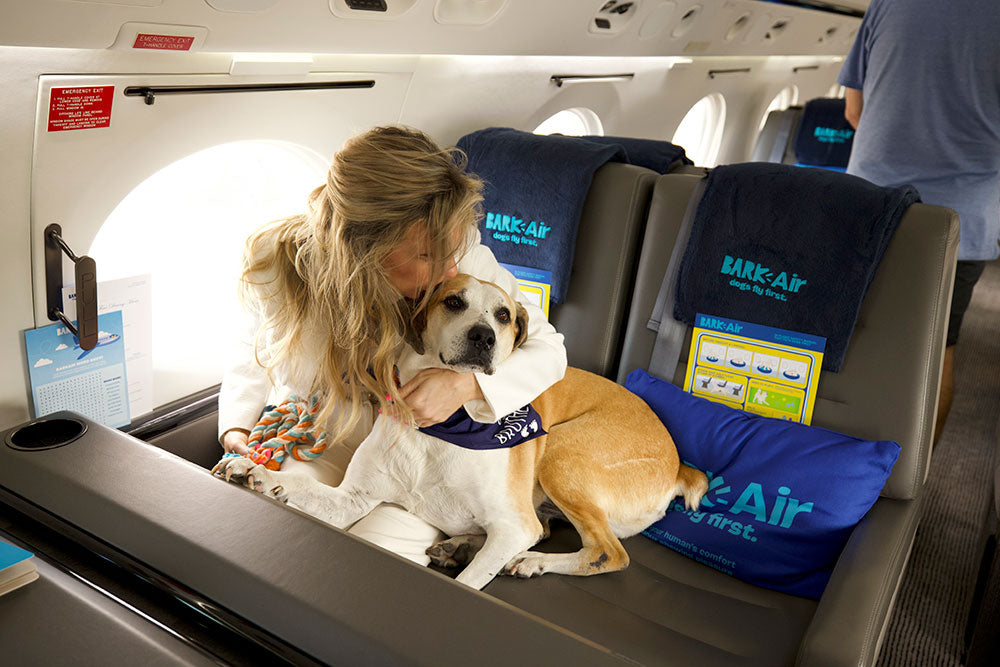
The company says, "We are launching BARK Air because, despite incredible demand from dog people, there is simply no good or convenient solution to traveling long distances with your dog. We recognize and believe that life is better – for you and for your dog – when you are together. We have spent years talking to airlines about how to make flying with your dog more accessible, and because of their resistance, we decided to build the solution ourselves."
How long can you leave a senior dog alone?

Senior dogs are sometimes adopted because people want a dog who might like to sleep more than, and might not need as much attention, as a puppy or young dog.
While these expectations might be somewhat accurate, senior dogs are actually quite varied in their needs for attention and exercise. It depends on everything from the physique of the dog to the dog’s intrinsic rate of aging to the dog’s basic nature (e.g., laid back or acutely attentive).
A good general rule to follow is to include your senior dog in activities as much as possible, taking into account an assessment of the dog’s overall state of health and mobility. You can assume that, even though the dog is senior, the desire to be active and, especially to be spending time with you are big motivators and that fulfilling those desires is the best route to the dog’s health and happiness.
For any dog of any age, it’s good to avoid long periods of leaving the dog alone. Of course, you’ll be aware of the dog’s need for appropriate potty breaks. Beyond that basic arrangement, all dogs of all ages need companionship and to feel “included” for a good part of every day. Seniors might have a tendency to sleep a bit more than young dogs, but that doesn’t mean that they aren’t lonely when left by themselves for extended periods.
Most of the dog care literature we’ve reviewed says that 4-6 hours is the maximum that a dog should be left alone. This is just a guideline, however, and not necessarily one that you can expect will be appropriate for your senior dog.
If you've just recently adopted a senior, you also might need to consider the experiences that caused the dog to become homeless. These experiences may create an increased need for your extending extra comforting and care during the first weeks, while you're getting acquainted.
Does having two seniors alleviate feelings of loneliness for each of them? You betcha! If you’re so inclined, you might want to consider having two seniors who will keep each other company during the times you need to be at work or fulfilling other obligations. Remember, though, that your personal presence means the world to your canine buddies, and no other creature can substitute for that.
Ultimately, dogs are highly adaptable. They can learn that, even if you must leave them for longer than the recommended period, you will come back to them. And they will be as happy as ever to see you.